Sage Butler · 19 October 2026
Navigating Content Discovery Challenges in Self-Managed Digital Spaces Through Algorithmic Curation Tools
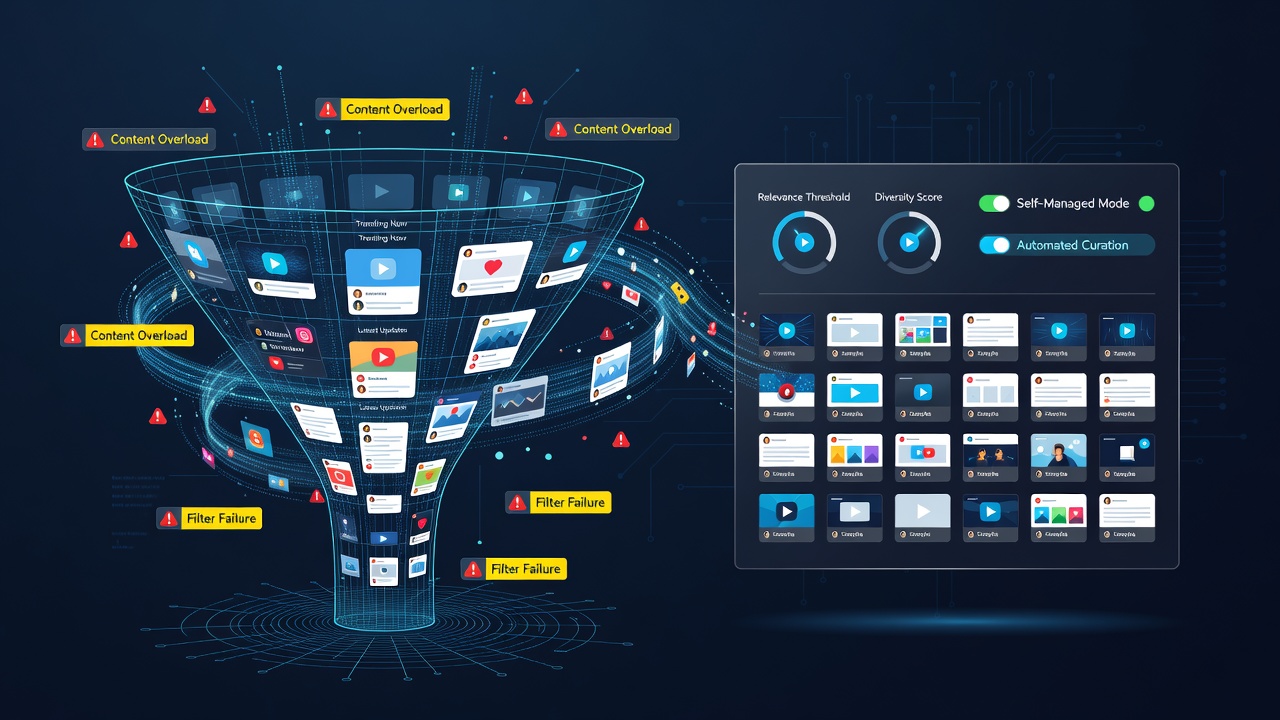
Self-managed digital spaces encompass personal websites, independent forums, and decentralized community platforms where users retain direct control over hosting and moderation rather than relying on centralized corporate services, and these environments have grown steadily through 2026 as more individuals and groups seek alternatives to mainstream networks. Data from multiple regions shows that discovery remains a persistent issue because content in these spaces lacks the built-in amplification mechanisms common on large platforms, which leads observers to examine algorithmic curation tools as practical responses that analyze user signals to surface relevant material without central gatekeepers.
Defining Self-Managed Digital Spaces and Their Structure
Independent operators run these spaces on self-hosted software stacks or federated protocols, which means content distribution depends on explicit links, RSS feeds, and community recommendations instead of proprietary recommendation engines. Researchers at institutions across North America and Europe have documented how such setups produce fragmented visibility, with new posts or updates often reaching only immediate followers unless additional mechanisms intervene. As of October 2026, adoption metrics indicate continued expansion in these environments, particularly among creators prioritizing data ownership and customized moderation policies over broad commercial reach.
Core Challenges in Content Discovery
Users frequently encounter limited indexing because search engines prioritize high-traffic domains, while internal navigation within a self-managed site or network relies on manual browsing or basic search functions that do not adapt to individual preferences. Studies from Australian academic sources reveal that engagement rates drop sharply when audiences cannot locate material matching their interests amid growing volumes of posts, and similar patterns appear in Canadian digital economy reports that track isolated platform performance. The absence of standardized signals for relevance creates situations where high-quality contributions remain unseen, prompting operators to test external tools that process behavioral data without transferring control of the underlying content.
Algorithmic Curation Tools as Practical Responses
These tools operate by ingesting metadata, interaction histories, and explicit user inputs to generate ranked or filtered views that surface material from across connected self-managed instances. Implementation often involves lightweight machine learning models deployed on the operator's own infrastructure, which preserves autonomy while addressing visibility gaps that static lists cannot resolve. Evidence from OECD analyses of digital platform dynamics indicates measurable improvements in session duration when such systems replace unfiltered feeds, and the same data sets highlight reduced bounce rates on sites that integrate curation layers. Operators in the European Union have applied these methods under regulatory frameworks that emphasize transparency in automated decision-making, allowing communities to maintain compliance while enhancing findability.
One documented case involves a network of independent educational sites that deployed open-source curation scripts to connect related posts across domains, resulting in sustained traffic increases tracked through server logs over multiple quarters. Another example appears in regional hobbyist forums that combined simple vector embeddings with user-defined tags, which produced discovery pathways that scaled as membership grew without requiring additional moderation staff. These implementations demonstrate how algorithmic approaches adapt to varying content types and community sizes while keeping data processing local.

Technical Considerations and Integration Patterns
Successful deployment requires careful selection of data sources that respect privacy boundaries, with many operators limiting inputs to on-site interactions and opt-in signals rather than cross-site tracking. Documentation from technical working groups shows that hybrid models combining collaborative filtering with content-based analysis deliver more stable results across diverse post formats than single-method approaches. Updates released in 2026 have introduced modular plugins that allow incremental testing, enabling site administrators to measure impact on specific sections before full rollout. Observers note that performance gains appear most consistent when curation respects existing community norms instead of overriding them with external ranking criteria.
Regulatory and Standards Landscape
Frameworks in multiple jurisdictions now address automated content handling, with the European Commission's digital services documentation requiring clear disclosure of ranking factors on platforms above certain thresholds. Parallel guidance from Canadian regulators focuses on accountability mechanisms for systems that influence visibility in user-controlled environments. Industry reports compiled by research organizations in the Asia-Pacific region further emphasize the value of audit trails that let operators review and adjust algorithmic outputs over time. These overlapping requirements shape how self-managed spaces adopt curation tools without introducing new compliance burdens.
Conclusion
Algorithmic curation tools continue to serve as targeted solutions for visibility constraints in self-managed digital spaces by processing available signals to connect users with relevant material while preserving operator control. Data collected through October 2026 confirms that careful integration yields measurable gains in reach and engagement across varied community types. Ongoing refinements in model efficiency and transparency standards support broader application as these environments expand, with operators drawing on documented patterns from earlier deployments to guide implementation choices.