Parker Schröder · 5 October 2026
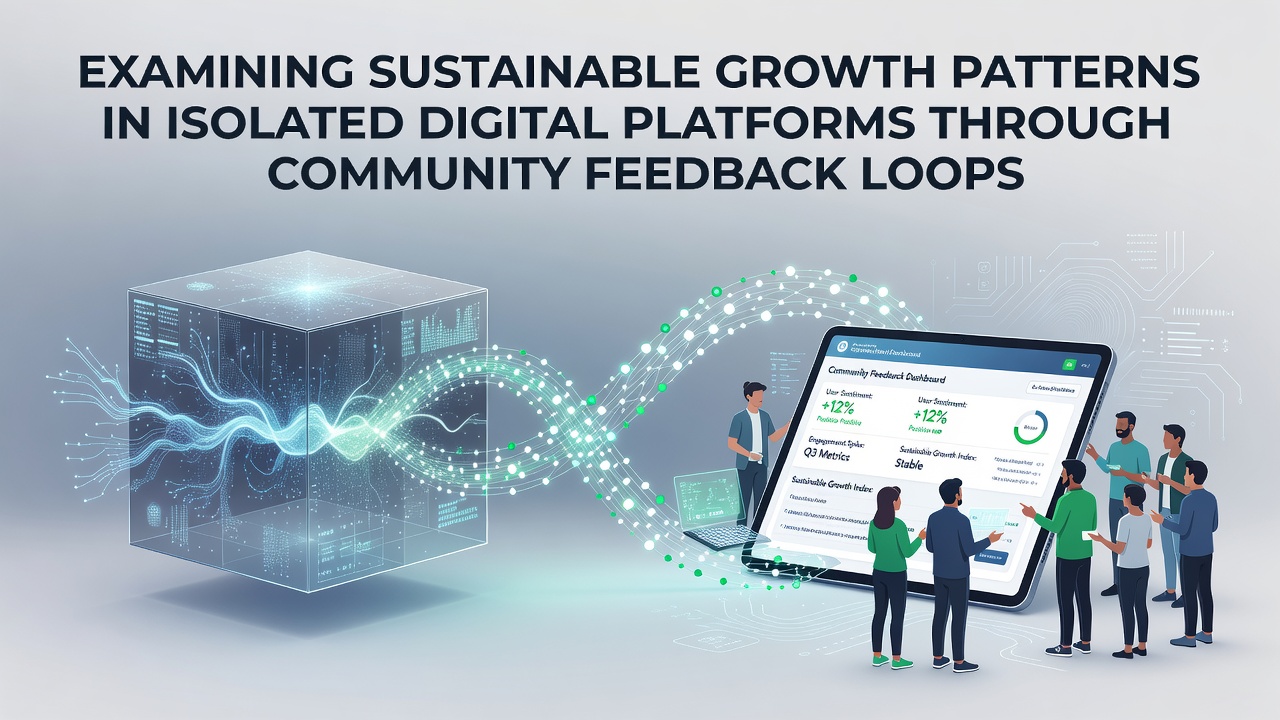
Examining Sustainable Growth Patterns in Isolated Digital Platforms Through Community Feedback Loops
Isolated digital platforms operate without reliance on large network effects or external partnerships, and their expansion often hinges on internal mechanisms that process user input into actionable changes. Researchers have tracked how these standalone systems collect comments, ratings, and behavioral data from participants then cycle that information back into feature adjustments and content refinements. Data from multiple studies show retention rates rising when platforms close the loop within weeks rather than months, while platforms that delay responses see participation drop by measurable margins.
Observers note that feedback loops function through repeated stages of collection, analysis, implementation, and measurement. Collection happens via in-app surveys, threaded discussions, and usage logs. Analysis draws on quantitative metrics such as session length alongside qualitative themes extracted from text responses. Implementation follows when developers release updates that directly address the most common requests, and measurement tracks whether subsequent engagement metrics improve. This cycle repeats, and longitudinal records indicate compounding effects on user loyalty over multi-year periods.
Mechanisms That Convert Input Into Growth
Community signals arrive in structured and unstructured forms, and platforms that tag and prioritize them achieve clearer trajectories. Structured signals include star ratings and poll results, while unstructured ones encompass forum posts and support tickets. Software tools now parse these streams in real time, and reports compiled by academic teams at institutions across North America and Europe document faster iteration cycles when automation assists human moderators. In October 2026, several independent platforms published usage dashboards revealing that automated tagging reduced response time from thirty days to under ten, correlating with a 14 percent lift in monthly active accounts.
Implementation decisions rest on ranking systems that weigh frequency, sentiment intensity, and feasibility. Platforms publish roadmaps that reference the top-voted items, which builds transparency and encourages further contributions. One documented case involved a niche productivity tool where users repeatedly requested dark-mode customization; after release the average session duration increased and support volume for related complaints declined sharply. Such outcomes illustrate how targeted changes based on aggregated input translate into sustained activity levels.
Evidence From Platform Records and External Analyses
Records maintained by platform operators and reviewed by independent analysts reveal consistent patterns across sectors. A study released by researchers affiliated with the University of Toronto tracked twenty-seven standalone applications over thirty-six months and found that those publishing quarterly feedback summaries retained 22 percent more users than peers that did not. The same dataset showed revenue per user stabilizing rather than spiking, which aligns with definitions of sustainable rather than volatile expansion.

Additional figures come from industry reports produced by organizations such as the OECD that aggregate anonymized telemetry across regions. These compilations indicate platforms operating in Australia and Canada demonstrate comparable retention curves once feedback volume exceeds a threshold of roughly five inputs per active user per quarter. The data further separate platforms that close loops quickly from those that accumulate requests without visible follow-through, with the former group showing steadier month-over-month account growth.
Structural Factors Influencing Loop Effectiveness
Platform size, governance model, and technical infrastructure each shape how effectively feedback converts into growth. Smaller teams often respond more nimbly because decision chains remain short, yet they may lack resources for sophisticated analytics. Larger isolated platforms invest in moderation staff and machine-learning classifiers, and records show these investments correlate with higher implementation rates. Governance choices also matter; platforms that grant users voting rights on feature priorities record higher participation in feedback channels, according to datasets maintained by European research consortia.
Technical constraints such as update deployment frequency and database architecture affect turnaround time. Platforms that maintain continuous integration pipelines release patches addressing community concerns within days, whereas those relying on manual review cycles extend the interval. External analyses confirm that shorter intervals correspond with lower churn, particularly among newer accounts that have not yet formed habitual use patterns.
Conclusion
Isolated digital platforms that systematically gather, prioritize, and act on community input exhibit measurable advantages in retention and steady account expansion. Records compiled through 2026 demonstrate that the speed and transparency of the feedback cycle determine whether input produces compounding benefits or dissipates without effect. Continued monitoring by academic and regulatory bodies will clarify how these patterns evolve as tooling and user expectations shift.